
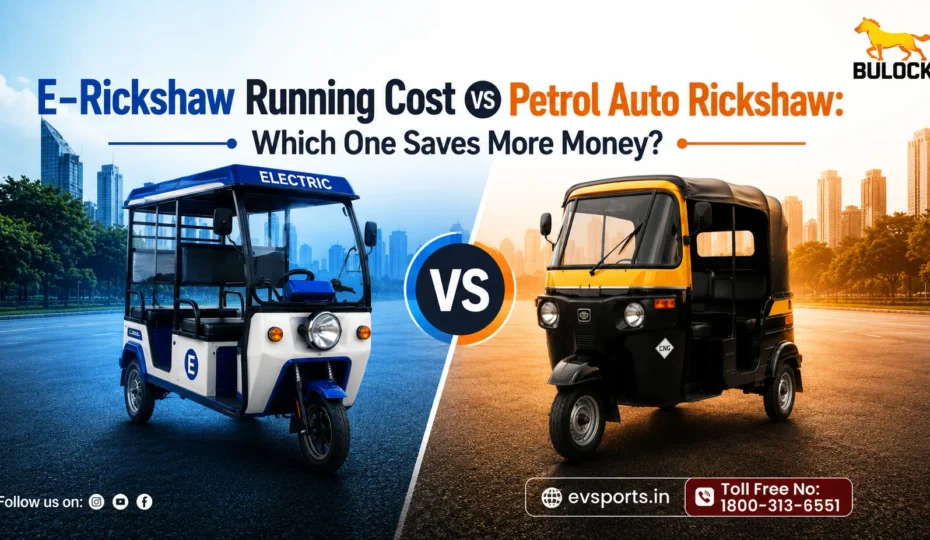
With rising fuel prices and growing awareness about eco-friendly transportation, many drivers and fleet owners are reconsidering their vehicle choices. One of the biggest debates today is whether an E-Rickshaw is more economical than a traditional Petrol Auto Rickshaw.
While both vehicles serve the same purpose—transporting passengers and goods—their operating costs can differ significantly. Understanding these costs is crucial for anyone planning to start a transportation business or replace an existing vehicle.
In this article, we’ll compare the running costs, maintenance expenses, profitability, and long-term benefits of E-Rickshaws and Petrol Auto Rickshaws to help you make an informed decision.
Understanding Running Costs
Running cost refers to the money spent on operating a vehicle regularly. This typically includes:
- Fuel or electricity expenses
- Maintenance and servicing
- Battery or engine-related costs
- Daily operational expenses
The lower the running cost, the higher the potential profit for the owner or driver.
Fuel Cost Comparison
Petrol Auto Rickshaw
Petrol Auto Rickshaws rely entirely on fuel for operation. As petrol prices continue to fluctuate, drivers often face increasing daily expenses.
For example:
- Average mileage: 25–35 km per litre
- Daily distance: 80–120 km
- Fuel consumption increases with traffic and load conditions
As fuel prices rise, operating costs increase directly, reducing profit margins.
E-Rickshaw
E-Rickshaws operate using rechargeable batteries and electric motors.
Typical charging cost:
- One full charge generally consumes less electricity than the cost of a litre of petrol.
- Most E-Rickshaws can cover an entire working day on a single charge depending on battery capacity and load.
As a result, the cost per kilometre is often significantly lower than petrol-powered alternatives.
Winner: E-Rickshaw
When it comes to daily energy expenses, E-Rickshaws usually offer substantial savings.
Cost Per Kilometer Comparison
One of the easiest ways to compare vehicles is by calculating their cost per kilometre.
Petrol Auto Rickshaw
The running cost per kilometre depends on:
- Petrol price
- Traffic conditions
- Vehicle condition
- Passenger load
The cost can vary considerably depending on location and fuel rates.
E-Rickshaw
Electricity costs are generally more stable and predictable.
The cost per kilometre remains relatively low because:
- Electric motors are highly efficient.
- No fuel combustion is involved.
- Less energy is wasted during operation.
Winner: E-Rickshaw
In most situations, E-Rickshaws offer a much lower cost per kilometre compared to petrol autos.
Maintenance Cost Comparison
Petrol Auto Rickshaw
A petrol vehicle contains many moving parts that require regular maintenance:
- Engine oil changes
- Spark plug replacement
- Air filter cleaning
- Clutch maintenance
- Exhaust system repairs
- Engine servicing
These recurring expenses can add up over time.
E-Rickshaw
E-Rickshaws have a simpler mechanical structure.
They generally require:
- Brake inspections
- Tire maintenance
- Electrical checks
- Battery care
Since there is no engine, gearbox, or fuel system, maintenance requirements are usually lower.
Winner: E-Rickshaw
Fewer mechanical components mean reduced servicing costs and less downtime.
Long-Term Ownership Expenses
Petrol Auto Rickshaw
Long-term costs include:
- Continuous fuel expenses
- Engine wear and tear
- Frequent servicing
- Component replacements
As the vehicle ages, maintenance costs often increase.
E-Rickshaw
The primary long-term expense is battery replacement.
Modern battery technologies are becoming more durable and efficient, helping reduce ownership costs over time.
Despite battery replacement expenses, many owners still find E-Rickshaws more economical due to savings on fuel and maintenance.
Profitability for Drivers
For commercial drivers, profit depends on the difference between earnings and expenses.
Petrol Auto Rickshaw
Higher fuel costs often reduce daily take-home income.
Drivers may need to work longer hours to maintain profitability when fuel prices rise.
E-Rickshaw
Lower operating expenses allow drivers to retain a larger portion of their daily earnings.
The savings generated from electricity and reduced maintenance can significantly improve monthly profitability.
Winner: E-Rickshaw
Lower expenses generally translate into better earnings potential.
Environmental Impact
Petrol Auto Rickshaw
Petrol engines produce:
- Carbon emissions
- Air pollution
- Noise pollution
This contributes to environmental concerns in urban areas.
E-Rickshaw
E-Rickshaws produce:
- Zero tailpipe emissions
- Lower noise levels
- Reduced environmental impact
They support cleaner and greener transportation systems.
Winner: E-Rickshaw
A more sustainable and environmentally friendly mobility solution.
Which Vehicle Is Better for Business?
The answer depends on your priorities.
Choose a Petrol Auto Rickshaw if:
- Charging infrastructure is unavailable in your area.
- You require extended uninterrupted operation.
- Fuel availability is more convenient than charging.
Choose an E-Rickshaw if:
- You want lower running costs.
- You aim to maximize profits.
- You prefer environmentally friendly transportation.
- You want lower maintenance expenses.
For most urban and semi-urban transportation businesses, E-Rickshaws are becoming the preferred choice due to their cost efficiency and sustainability.
Final Thoughts
The comparison between E-Rickshaw running costs and Petrol Auto Rickshaw expenses clearly highlights the economic advantages of electric mobility. While petrol vehicles continue to serve certain applications, the lower energy costs, reduced maintenance requirements, and improved profitability of E-Rickshaws make them an attractive option for modern transportation businesses.
As fuel prices continue to rise and electric vehicle technology advances, E-Rickshaws are increasingly proving to be a smart investment for drivers, fleet operators, and entrepreneurs looking to reduce expenses while increasing earnings.
Choosing the right vehicle ultimately depends on your operating requirements, but from a cost-saving perspective, E-Rickshaws have a clear edge in today’s transportation landscape.