
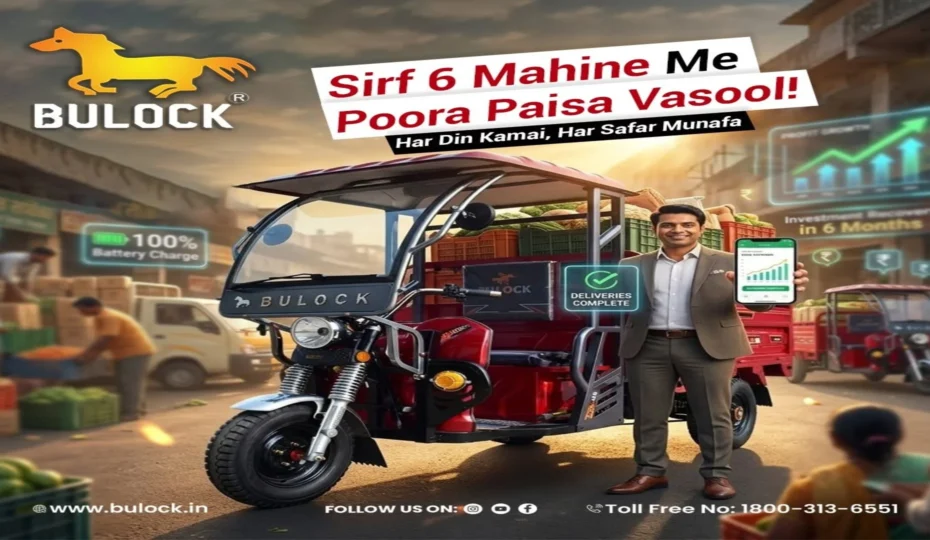
In today’s fast-changing transportation industry, drivers are constantly looking for ways to earn more while reducing their operating expenses. Rising fuel prices, increasing maintenance costs, and growing competition have made it difficult for many traditional auto-rickshaw drivers to maintain healthy profits.
This is where E-Rickshaws have emerged as a game-changing solution. Affordable, eco-friendly, and highly economical, E-Rickshaws are helping thousands of drivers across India increase their daily income while enjoying lower operating costs and better financial stability.
Whether you are planning to start a passenger transport business or looking to replace your conventional vehicle, understanding the earning potential of an E-Rickshaw can help you make a smarter business decision.
Why E-Rickshaws Are Becoming the Preferred Choice
E-Rickshaws have become increasingly popular in both urban and rural areas due to their low running costs and high earning opportunities. Unlike petrol or diesel vehicles, E-Rickshaws run on electricity, significantly reducing daily expenses.
The combination of affordable operation, minimal maintenance, and growing passenger demand allows drivers to maximize their profits every day.
1. Significantly Lower Running Costs
One of the biggest advantages of an E-Rickshaw is its low operational cost.
A conventional auto-rickshaw requires daily spending on fuel, which can consume a significant portion of a driver’s earnings. In contrast, charging an E-Rickshaw battery costs only a fraction of that amount.
Example:
- Daily fuel expense for traditional auto: ₹500 – ₹800
- Daily charging cost for E-Rickshaw: ₹50 – ₹150
This difference directly increases the driver’s take-home income.
When expenses decrease, profits naturally increase.
2. Higher Profit Margins Per Trip
Every rupee saved on operating expenses contributes directly to profit.
Since E-Rickshaws consume electricity instead of expensive fuel, drivers can retain a larger percentage of their daily earnings. Even if fare rates remain the same, lower operating costs help drivers earn more from every trip completed.
Over a month, these savings can translate into substantial additional income.
3. Low Maintenance Requirements
Vehicle maintenance is another major expense for commercial drivers.
Traditional vehicles have engines, gear systems, fuel filters, and many moving components that require regular servicing. E-Rickshaws have a much simpler design, resulting in:
- Lower maintenance costs
- Fewer breakdowns
- Reduced repair expenses
- Less downtime
When a vehicle spends more time on the road and less time in the workshop, drivers can complete more trips and generate more revenue.
4. More Trips Every Day
E-Rickshaws are ideal for short-distance transportation in busy cities, towns, and marketplaces.
Their compact size allows drivers to navigate through traffic and narrow roads more efficiently than larger vehicles.
This helps drivers:
- Save travel time
- Complete more trips
- Serve more passengers
- Increase daily earnings
Even a few additional trips each day can significantly impact monthly income.
5. Growing Demand for Affordable Transportation
Passengers are increasingly choosing E-Rickshaws because they offer:
- Affordable fares
- Comfortable rides
- Easy availability
- Environmentally friendly transportation
As cities continue to promote green mobility solutions, the demand for E-Rickshaw services is expected to rise further.
Higher passenger demand means more ride opportunities and better earning potential for drivers.
6. Additional Income Through Local Deliveries
Many E-Rickshaw owners use their vehicles for more than passenger transportation.
During non-peak hours, drivers can generate extra income by offering:
- Local parcel delivery
- Grocery transportation
- E-commerce deliveries
- Small business logistics support
This creates multiple income streams from a single vehicle, improving overall profitability.
7. Government Support and EV Promotion
The Indian government continues to promote electric mobility through various initiatives and policies.
Growing investment in EV infrastructure, charging facilities, and awareness campaigns has encouraged more people to adopt electric transportation.
As the EV ecosystem expands, E-Rickshaw drivers benefit from:
- Better charging accessibility
- Increased public acceptance
- Improved business opportunities
These factors contribute to long-term income growth.
8. Faster Return on Investment (ROI)
Because of lower operating expenses and consistent earning potential, many drivers recover their vehicle investment faster compared to traditional fuel-powered alternatives.
A well-utilized E-Rickshaw can help owners achieve:
- Quicker payback periods
- Better monthly savings
- Higher long-term profitability
For entrepreneurs and drivers, this makes E-Rickshaws an attractive business investment.
Real Income Benefits of E-Rickshaw Ownership
While earnings vary depending on location, route, passenger demand, and operating hours, many drivers report noticeable improvements in profitability after switching to electric mobility.
Common financial benefits include:
✓ Reduced daily expenses
✓ Increased monthly savings
✓ Higher profit per trip
✓ Lower maintenance costs
✓ Additional earning opportunities
✓ Better business sustainability
Future of E-Rickshaw Driving in India
The future of E-Rickshaws looks promising as India moves toward cleaner and more sustainable transportation solutions.
Growing urbanization, rising fuel prices, environmental awareness, and government support are creating new opportunities for E-Rickshaw owners and drivers.
Those who adopt electric mobility today are positioning themselves to benefit from a rapidly expanding market while enjoying improved earning potential.
Conclusion
E-Rickshaws are transforming the livelihood of thousands of drivers by providing a cost-effective and profitable transportation solution. Lower operating costs, reduced maintenance expenses, increased passenger demand, and multiple earning opportunities make E-Rickshaws an excellent choice for drivers looking to improve their daily income.
For anyone seeking a reliable and sustainable business opportunity, investing in an E-Rickshaw can be a smart step toward long-term financial growth and success.
Frequently Asked Questions (FAQs)
1. How much can an E-Rickshaw driver earn per day?
Daily earnings depend on location, passenger demand, and working hours. Many drivers earn significantly more than traditional fuel-powered vehicle operators because of lower operating costs.
2. Are E-Rickshaws cheaper to operate than petrol or diesel vehicles?
Yes. E-Rickshaws run on electricity, which generally costs much less than petrol or diesel, helping drivers save money every day.
3. What are the maintenance costs of an E-Rickshaw?
E-Rickshaws have fewer mechanical components compared to conventional vehicles, resulting in lower maintenance and repair expenses.
4. Can E-Rickshaws be used for delivery services?
Yes. Many owners use E-Rickshaws for local parcel delivery, grocery transportation, and small business logistics, creating additional income opportunities.
5. How long does an E-Rickshaw battery last?
Battery life depends on battery type, usage patterns, charging habits, and maintenance. Proper care can significantly extend battery performance.
6. Is investing in an E-Rickshaw profitable?
Due to low running costs and growing demand for electric transportation, E-Rickshaws are considered a profitable business investment for many drivers and entrepreneurs.
7. Why are passengers choosing E-Rickshaws?
Passengers prefer E-Rickshaws because they offer affordable fares, comfortable rides, and environmentally friendly transportation.
8. Do E-Rickshaws help reduce pollution?
Yes. Since E-Rickshaws operate on electricity, they produce zero tailpipe emissions and contribute to cleaner urban transportation.
9. What factors affect E-Rickshaw earnings?
Location, passenger traffic, route selection, operating hours, battery performance, and local demand all influence daily earnings.
10. What is the future of the E-Rickshaw business in India?
The future is highly promising due to increasing EV adoption, government support, rising fuel prices, and growing demand for sustainable transportation solutions.