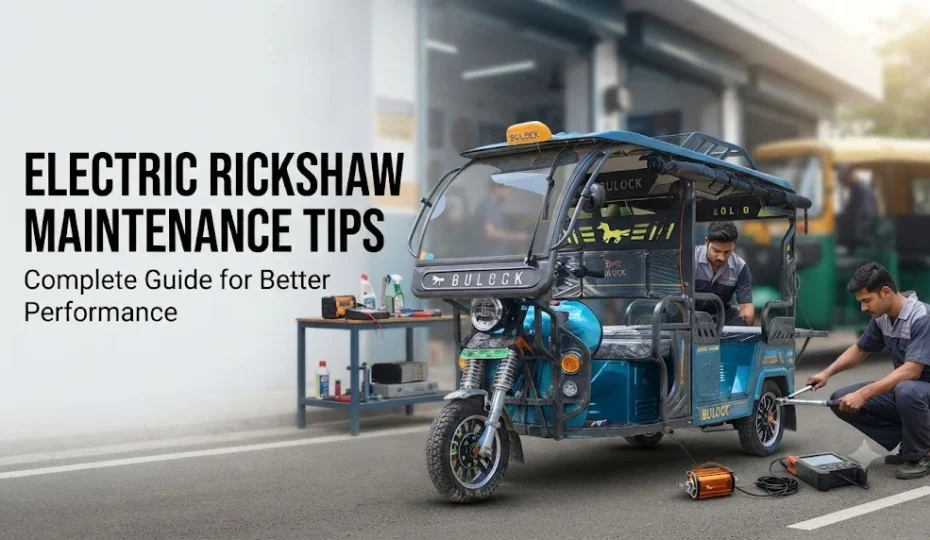
Electric rickshaws have become an important part of everyday transportation in India. They are affordable to operate, easy to use, and a practical choice for short-distance travel. For many drivers and owners, an e-rickshaw is also an important source of income.
But like any vehicle, an electric rickshaw needs regular care to deliver reliable performance. Proper maintenance of electric rickshaw can help prevent unexpected breakdowns, improve safety, and increase the overall life of important components such as the battery, motor, tyres, brakes, and suspension.
Whether you are already using an e-rickshaw or planning to buy one, understanding basic maintenance can save you from unnecessary repair expenses in the future.
In this guide, we will discuss some simple and practical electric rickshaw maintenance tips that every owner and driver should follow.
Table of Contents
- Check the Battery Regularly
- Take Care of the Tyres
- Keep Your E-Rickshaw Clean
- Lubricate Moving Components
- Inspect the Brakes
- Maintain the Electric Motor
- Check the Electrical System
- Protect the Body and Exterior
- Follow the Manufacturer’s Maintenance Schedule
- Use Genuine Replacement Parts
- Check the Suspension System
- Follow Better Driving Habits
- Conclusion
- Frequently Asked Questions
1. Check the Battery Regularly
The battery is one of the most important components of an electric rickshaw. A battery that is not maintained properly can affect range, performance, and charging efficiency.
If your e-rickshaw uses a lead-acid battery, regularly check the electrolyte level and add distilled water when required. Never use ordinary tap water because it can affect battery performance.
Also, inspect the battery terminals and cables for dirt, corrosion, or loose connections. Make sure the battery is charged according to the manufacturer’s recommendations and avoid leaving it completely discharged for long periods.
For lithium-ion battery models, follow the specific charging and maintenance instructions provided by the manufacturer.
Good battery care is an essential part of maintenance of electric rickshaw and can help you get more reliable performance from your vehicle.
2. Take Care of the Tyres
Tyres directly affect the safety, stability, and comfort of your e-rickshaw. Before starting your daily trips, take a quick look at the tyres and check whether they appear properly inflated.
Incorrect tyre pressure can increase rolling resistance and may reduce efficiency. It can also cause uneven tyre wear.
Check for:
- Low or excessive tyre pressure
- Uneven tread wear
- Cuts or cracks
- Punctures
- Loose or damaged components
Follow the tyre-pressure recommendation provided by your e-rickshaw manufacturer.
3. Keep Your E-Rickshaw Clean
Regular cleaning may seem like a small task, but it can make a significant difference to your vehicle’s condition.
Dust, mud, moisture, and dirt can collect around different parts of the e-rickshaw. Over time, this buildup may contribute to corrosion or affect certain mechanical and electrical components.
Clean the body, floor, seats, and other accessible areas regularly. However, avoid directly spraying large amounts of water onto sensitive electrical components, battery connections, controllers, or other areas where water could cause damage.
A clean e-rickshaw not only looks better but can also make it easier to notice leaks, loose parts, cracks, or other problems at an early stage.
4. Lubricate Moving Components
Several mechanical components of an electric rickshaw contain moving parts that require proper lubrication.
Regular lubrication can reduce friction and help components operate smoothly. Depending on the model, areas such as joints, linkages, bearings, and other moving mechanical parts may require attention.
Do not apply lubricant randomly to electrical components or parts that are not designed to be lubricated. Always follow the manufacturer’s recommendations or ask a qualified technician.
Proper lubrication can help reduce unnecessary wear and contribute to smoother vehicle operation.
5. Inspect the Brakes
Brakes are one of the most important safety components of an e-rickshaw. Since the vehicle regularly carries passengers, reliable braking performance should never be ignored.
Pay attention if you notice:
- Reduced braking performance
- Unusual sounds while braking
- Excessive brake lever travel
- Vibrations
- Difficulty bringing the vehicle to a stop
If you notice any of these signs, have the braking system inspected by a qualified mechanic.
Brake shoes, pads, cables, or other components should be replaced when they become worn. Regular brake inspection is an important part of maintenance of electric rickshaw because it directly affects the safety of both the driver and passengers.
6. Maintain the Electric Motor
The electric motor is responsible for converting electrical energy into the movement that drives your e-rickshaw.
A motor that is working properly should provide smooth and consistent performance. If you notice unusual noise, excessive vibration, overheating, or a sudden drop in performance, do not ignore the problem.
Getting a minor motor issue checked early can help prevent a more expensive repair later.
Keep the motor and surrounding area clean and make sure its connections are properly maintained according to the manufacturer’s service instructions.
7. Check the Electrical System
An electric rickshaw depends on several electrical components for everyday operation. This includes lights, indicators, horn, switches, wiring, controller, charging system, and other electrical connections.
Check the electrical system regularly and make sure:
- Headlights are working properly
- Indicators are functioning
- The horn works correctly
- Wiring does not appear damaged
- Connections are secure
- There are no unusual burning smells or signs of overheating
If an electrical fault appears, it is better to get professional assistance instead of attempting an unsafe repair yourself.
8. Protect the Body and Exterior
Your e-rickshaw is exposed to sunlight, rain, dust, and changing weather conditions every day. Long-term exposure can affect the paint and metal components.
Whenever possible, park the vehicle in a covered area. If indoor parking is not available, consider using a suitable vehicle cover.
Keeping the body clean and dry can also help reduce the possibility of rust and corrosion.
9. Follow the Manufacturer’s Maintenance Schedule
Every e-rickshaw can have different maintenance requirements depending on its battery type, motor, design, and components.
For this reason, do not rely only on general maintenance advice. Always check the owner’s manual and follow the manufacturer’s recommended service schedule.
Regular servicing allows technicians to inspect important components and identify potential problems before they become major issues.
10. Use Genuine Replacement Parts
When a component needs replacement, choosing the cheapest available part may not always be the best decision.
Poor-quality parts can affect vehicle performance and may wear out faster. Whenever possible, use genuine or manufacturer-approved replacement components that are compatible with your e-rickshaw.
This is especially important for critical components such as brakes, electrical parts, suspension components, tyres, and battery-related equipment.
Good-quality replacement parts can provide better reliability and help maintain the original performance of the vehicle.
11. Check the Suspension System
A comfortable ride depends partly on a properly functioning suspension system. Since e-rickshaws often travel on uneven Indian roads, suspension components can experience considerable stress.
Pay attention to unusual sounds, excessive bouncing, uneven handling, or a noticeable change in ride comfort.
Have the suspension inspected if you notice any unusual behaviour. Worn components should be replaced when necessary.
Regular suspension checks can improve passenger comfort and help maintain better vehicle stability.
12. Follow Better Driving Habits
Maintenance is not limited to servicing and repairs. The way an e-rickshaw is driven can also affect its performance and component life.
Try to avoid unnecessary sudden acceleration, harsh braking, and overloading. Drive at a steady and suitable speed, particularly on uneven or damaged roads.
Smooth driving can reduce unnecessary stress on the motor, tyres, suspension, brakes, and other components.
Good driving habits combined with regular servicing can help improve the overall efficiency and reliability of your e-rickshaw.
Why Is Regular Maintenance of Electric Rickshaw Important?
Regular maintenance of electric rickshaw is important because it can help you identify small issues before they turn into expensive problems.
A well-maintained e-rickshaw can offer:
- Better overall performance
- Improved passenger safety
- Longer component life
- More reliable daily operation
- Fewer unexpected breakdowns
- Better driving comfort
- Lower chances of major repair expenses
For drivers who depend on their e-rickshaw for their daily income, avoiding unnecessary downtime can be especially important.
Simple Daily E-Rickshaw Maintenance Checklist
Before starting your daily work, spend a few minutes checking the basic condition of your vehicle.
Daily checks:
- Check tyre condition and pressure
- Test the brakes
- Check headlights and indicators
- Test the horn
- Look for loose wires or connections
- Check for unusual sounds
- Make sure there are no visible leaks or damaged parts
These simple checks take very little time but can help you identify potential problems early.
Conclusion
An electric rickshaw is a valuable investment, especially for people who use it for daily transportation or as a source of income. Taking care of it regularly can help you get better performance and more dependable service over the long term.
From checking the battery and tyres to inspecting the brakes, motor, suspension, and electrical components, every small maintenance task has a role to play.
The key is to maintain your electric rickshaw regularly instead of waiting for a major problem to appear. Follow the manufacturer’s service recommendations, use quality replacement parts, and get professional help whenever you notice a serious issue.
With proper care and responsible driving, your e-rickshaw can remain reliable, comfortable, and efficient for years to come.
Frequently Asked Questions
1. How often should an electric rickshaw be serviced?
The service interval depends on the model and manufacturer. Follow the service schedule mentioned in your owner’s manual and get the vehicle inspected whenever you notice unusual performance.
2. How can I improve the performance of my e-rickshaw?
Regular battery care, correct tyre pressure, proper brake maintenance, timely servicing, and smooth driving habits can help maintain good vehicle performance.
3. What should I check before driving an e-rickshaw?
Check the brakes, tyres, lights, indicators, horn, battery condition, and any visible wiring or mechanical issues before starting your trip.
4. Why is battery maintenance important for an electric rickshaw?
The battery supplies the electrical energy required to operate the vehicle. Proper battery care can help maintain consistent performance, charging efficiency, and battery life.
5. Can poor driving habits affect an e-rickshaw?
Yes. Frequent sudden acceleration, harsh braking, overloading, and driving aggressively on rough roads can put additional stress on various vehicle components.
6. When should I replace e-rickshaw parts?
Parts should be replaced when they become worn, damaged, or fail to perform properly. Always choose compatible, good-quality replacement parts and follow the manufacturer’s recommendations.