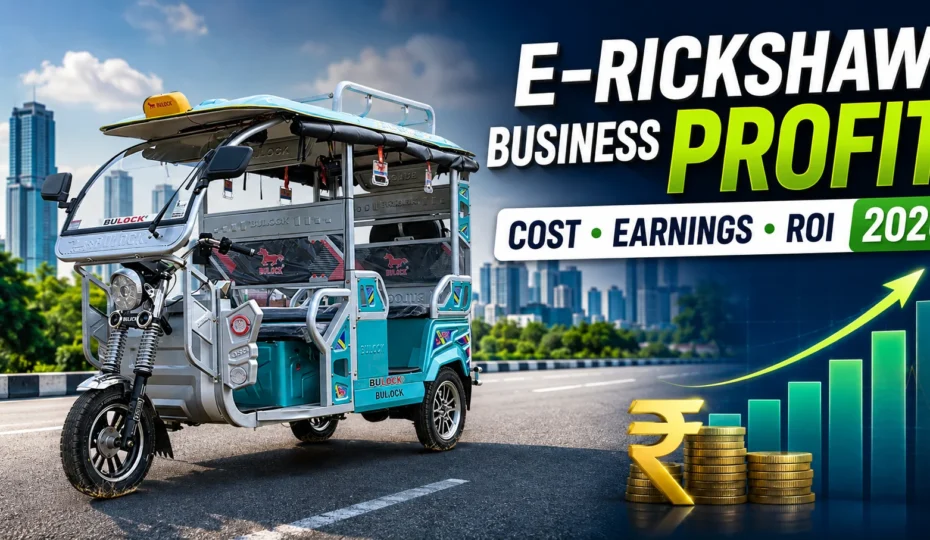
Thinking about starting an e-rickshaw business in 2026? You are not alone. E-rickshaws have become a familiar sight in cities, towns and semi-urban areas across India. From railway stations and markets to residential areas and local transport routes, they are widely used for short-distance travel.
For many people, buying an e-rickshaw is more than just buying a vehicle. It can be a way to create a regular source of income.
But before investing your money, one question is important:
How much profit can you actually make from an e-rickshaw?
There is no single answer because earnings depend on your location, passenger demand, daily working hours, route, vehicle, battery, maintenance and other expenses.
In this guide, we will look at the main costs, possible earnings and important things you should consider before starting an e-rickshaw business.
Why Are E-Rickshaws Popular for Business?
E-rickshaws are popular because they are suitable for short-distance passenger transportation and can operate on many local routes.
They are commonly used for travelling between:
- Railway stations and residential areas
- Bus stands and local markets
- Schools and nearby neighbourhoods
- Hospitals and residential areas
- Markets and shopping areas
- Metro stations and surrounding locations
Another reason for their popularity is the comparatively low running cost of electric vehicles.
For someone planning a small transportation business, these factors can make an e-rickshaw worth considering.
How Much Can an E-Rickshaw Earn in a Day?
Daily income depends mainly on the route and number of passengers.
A busy route can generate more income than a less crowded route. Working hours also make a difference.
As an example, suppose an e-rickshaw generates around ₹1,200 in gross income per day and operates for 26 days in a month.
The calculation would be:
₹1,200 × 26 days = ₹31,200 gross monthly income
Remember that this is gross income, not your final profit.
You still need to consider charging, maintenance, battery expenses, EMI, insurance and other costs.
How Much Profit Can You Make From an E-Rickshaw?
Your actual profit is what remains after paying your regular expenses.
For example:
Monthly gross income: ₹31,200
Suppose your total monthly operating expenses are around ₹8,000.
Then:
₹31,200 – ₹8,000 = ₹23,200 estimated monthly profit
This is only an example to explain the calculation. Your actual profit could be higher or lower depending on your location, vehicle and daily earnings.
Some market estimates for 2026 put owner-driver take-home income in the range of roughly ₹16,500 to ₹29,500 per month, although earnings can vary widely from one location to another. (credif.in)
What Decides Your E-Rickshaw Profit?
Several things can affect your monthly income. Understanding these factors before buying a vehicle can help you make a better business decision.
1. Your Location Matters
Location can make a big difference.
If your e-rickshaw operates near a busy railway station, market, school, hospital or bus stand, you may get more passengers throughout the day.
Before choosing a route, spend some time checking passenger movement and existing e-rickshaw traffic in the area.
2. Daily Passenger Demand
More passengers generally mean more trips and better earning potential.
However, don’t assume that every busy area will automatically be profitable. Competition, local fares and route restrictions can also affect your income.
3. Daily Running
Your working hours and daily kilometres also affect your income.
If you work during busy hours and choose routes with regular passenger demand, you may be able to make better use of your vehicle.
At the same time, running the vehicle for longer distances can increase tyre wear, maintenance requirements and electricity consumption.
4. Battery Type
The battery is one of the most important parts of an e-rickshaw.
You may find vehicles with different battery options, including lead-acid and lithium-ion batteries.
Lead-acid batteries usually have a lower initial cost, while lithium-ion batteries generally have a higher purchase price but can offer advantages in terms of weight, charging and service life.
A 2026 study comparing e-rickshaw technologies found that lithium-ion models can provide better lifecycle profitability than lead-acid models under the conditions studied. (sciencedirect.com)
So, don’t choose a battery only because it is cheaper at the time of purchase. Think about the long-term cost as well.
How Much Does It Cost to Run an E-Rickshaw?
One of the main reasons people consider electric rickshaws for commercial use is their relatively low energy cost.
Your actual charging cost depends on factors such as:
- Battery capacity
- Electricity tariff
- Vehicle efficiency
- Daily kilometres
- Passenger/load
- Charging habits
- Battery condition
Some 2026 estimates put e-rickshaw energy costs at around ₹0.30–₹0.50 per kilometre under certain operating conditions. However, actual costs can vary. (ev.care)
For example, if your vehicle uses electricity equivalent to ₹0.40 per kilometre and travels 100 km:
100 × ₹0.40 = ₹40
This is simply an example. Your actual charging cost may be different.
E-Rickshaw Maintenance Cost
An e-rickshaw does not have a traditional petrol or diesel engine, but that does not mean it needs zero maintenance.
You still need to take care of things such as:
- Tyres
- Brakes
- Suspension
- Electrical components
- Battery
- Motor
- Wiring
- Lights and other accessories
Regular servicing can help you avoid unexpected breakdowns.
For a commercial vehicle, this is especially important because every day the vehicle stays off the road can mean lost income.
E-Rickshaw vs Petrol or CNG Auto
When comparing an e-rickshaw with a petrol or CNG auto, don’t look only at the purchase price.
Look at the total cost of running the vehicle.
Consider:
- Purchase price
- EMI
- Fuel or electricity
- Battery replacement
- Maintenance
- Insurance
- Tyres
- Registration and permits
- Downtime
- Resale value
Electric vehicles can have a running-cost advantage in many situations, but the actual savings depend on your vehicle and local operating conditions.
How Can You Increase Your E-Rickshaw Profit?
You don’t always need to work longer hours to improve your earnings. Managing your business properly can also make a difference.
Choose the Right Route
Look for places where people regularly need short-distance transportation.
Railway stations, markets, hospitals, schools, residential areas and transport hubs can be good places to research.
Keep Your Vehicle in Good Condition
A vehicle that regularly breaks down can affect your income.
Follow the manufacturer’s service recommendations and take care of the battery, tyres, brakes and other important components.
Look After the Battery
The battery is a major investment, so proper charging and maintenance are important.
Always follow the manufacturer’s charging instructions and avoid practices that can unnecessarily reduce battery performance.
Keep Track of Your Money
This is something many new business owners overlook.
Write down your daily:
- Passenger income
- Charging expense
- Maintenance expense
- EMI
- Other expenses
At the end of every month, you will have a much clearer idea of your actual profit.
Is an E-Rickshaw Business Profitable in 2026?
An e-rickshaw business can be profitable, but it is important to have realistic expectations.
Your income will depend on where you operate, how much passenger demand exists, how many hours you work and how well you control your expenses.
For example, an owner-driver working on a busy route may have a very different income from someone operating in an area with limited passenger demand.
That is why it is better to calculate your expected income before buying the vehicle.
Think about:
Expected daily income × working days – monthly expenses = estimated profit
This simple calculation can help you decide whether the business makes sense for you.
Things to Check Before Buying an E-Rickshaw
Don’t choose an e-rickshaw only because the price looks attractive.
Before purchasing, check:
- Battery type and capacity
- Expected range
- Charging time
- Motor specifications
- Passenger capacity
- Vehicle build quality
- Warranty
- Service support
- Spare-parts availability
- Financing options
- Registration and applicable local requirements
A good service network is especially important for a commercial vehicle because your income depends on keeping the vehicle on the road.
Final Thoughts
Starting an e-rickshaw business in India in 2026 can be a practical option for people looking for a small transportation business or self-employment opportunity.
But the key to making money is not simply buying an e-rickshaw.
You need to choose the right vehicle, understand your local market, find a suitable route and keep your running costs under control.
Before making a purchase, calculate your expected daily income and subtract your charging, maintenance, battery, EMI and other expenses.
If the numbers work for your location, an e-rickshaw can become a useful source of regular income.
The smartest approach is simple: understand your market first, calculate your costs and then choose the right e-rickshaw for your business.
Frequently Asked Questions
Is an e-rickshaw business profitable?
Yes, it can be profitable when there is good passenger demand and the vehicle’s running and maintenance costs are properly managed.
How much can an e-rickshaw earn per day?
Daily earnings vary depending on the location, route, passenger demand, fares and working hours. Indicative 2026 estimates commonly place gross daily earnings around ₹800–₹1,500, but actual income can vary significantly. (credif.in)
What is the monthly profit of an e-rickshaw?
There is no fixed monthly profit. It depends on your gross income and expenses such as charging, maintenance, battery costs and EMI.
Which battery is better for an e-rickshaw?
Both lead-acid and lithium-ion batteries have their own advantages. Lithium-ion generally costs more initially but can offer advantages in service life and lifecycle cost.
How can I increase my e-rickshaw income?
Choosing a good route, operating during high-demand periods, maintaining the vehicle properly and controlling unnecessary expenses can help improve profitability.
Should I buy an e-rickshaw for business in 2026?
It can be a good option if your area has sufficient passenger demand and the expected income is higher than your total monthly expenses. Always calculate your expected ROI before purchasing.