
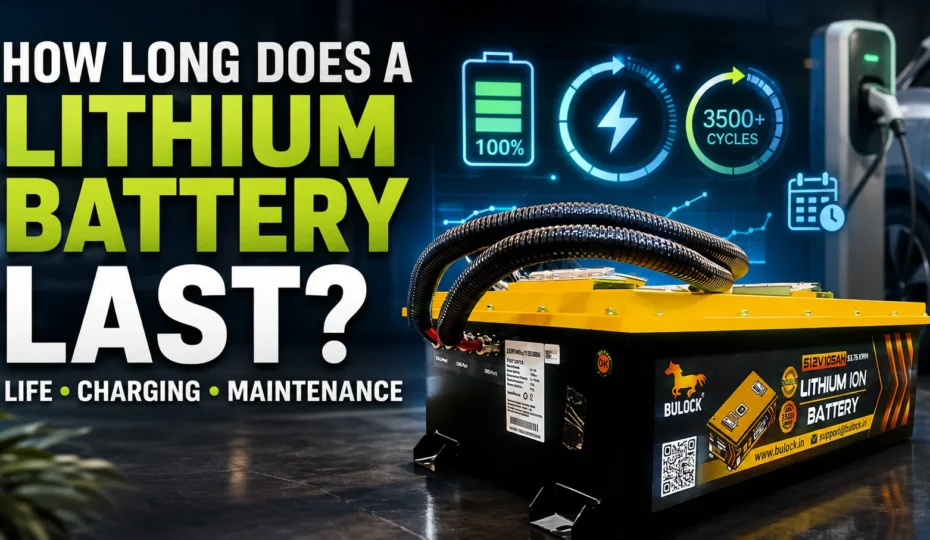
If you are thinking about buying a lithium battery, one of the first questions you may have is, “How long will it actually last?”
It’s a fair question because lithium batteries usually cost more upfront than traditional lead-acid batteries. So, before spending money on one, you want to know whether it will give you good performance for years.
The good news is that a good-quality lithium battery can have a long service life when it is used and charged properly. However, there isn’t one fixed number of years that applies to every battery. Its life depends on how often you use it, how deeply you discharge it, the charging method, temperature, battery quality, and several other factors.
In this guide, we’ll explain lithium battery life, charging, cycle life, maintenance, and the simple things you can do to make your battery last longer.
How Long Does a Lithium Battery Last?
A lithium battery can generally last for several years, but its actual lifespan depends on the type of battery and how it is used.
For example, a battery that is used occasionally for home backup may experience less wear than one that is charged and discharged several times every day.
Instead of looking only at the number of years, you should also look at something called cycle life.
A battery’s cycle life tells you approximately how many charge and discharge cycles it can go through before its capacity starts to reduce significantly.
A good-quality lithium battery can offer thousands of cycles, depending on its chemistry and design.
This doesn’t mean that the battery will suddenly stop working once it reaches its rated cycle count. Battery capacity normally decreases gradually over time.
What Does “Battery Cycle” Mean?
You may have seen terms such as 2,000 cycles, 3,000 cycles, or 5,000 cycles while comparing lithium batteries.
But what exactly does a cycle mean?
Simply put, one cycle represents the use and replacement of a certain amount of the battery’s stored energy.
For example, if you use part of your battery’s capacity and then recharge it, that contributes toward the battery’s overall cycle usage. The exact way manufacturers calculate cycles can vary.
This is why you shouldn’t compare two batteries based only on their cycle numbers.
Before buying, check the conditions under which the manufacturer tested the battery, including the depth of discharge, temperature, and other operating conditions.
What Affects Lithium Battery Life?
Several things can affect how long your battery lasts.
1. How Often You Use It
The more frequently a battery is charged and discharged, the more cycles it goes through.
A battery used every day will naturally experience more wear than one used only occasionally.
2. Depth of Discharge
How much of the battery you use before charging also matters.
Regularly draining a battery very deeply can put more stress on the cells. Following the recommended operating range can help improve long-term performance.
3. Temperature
Temperature is another important factor.
Very high temperatures can speed up battery ageing, while very low temperatures can affect charging and performance.
For this reason, batteries should be installed and stored according to the manufacturer’s recommended temperature range.
4. Charging Method
Using the correct charger is extremely important.
A lithium battery should always be charged with a charger that is compatible with its voltage, chemistry, and charging requirements.
5. Battery Quality
Not all lithium batteries are made the same.
The quality of the cells, battery design, Battery Management System (BMS), manufacturing process, and overall construction can make a significant difference to performance and lifespan.
How Long Does It Take to Charge a Lithium Battery?
One of the biggest advantages of lithium batteries is their ability to charge relatively quickly compared with many traditional battery systems.
However, charging time depends on several factors, such as:
- Battery capacity
- Charger output
- Current state of charge
- Battery temperature
- Charging efficiency
- Battery charging specifications
A larger battery will generally take longer to charge than a smaller one when using the same charger.
A simple way to estimate charging time is:
Charging Time ≈ Battery Capacity ÷ Charging Current
But this is only an approximate calculation. Actual charging can take longer because the charging current can change during the charging process.
Always follow the charging instructions provided by the battery manufacturer.
Does Charging Affect Lithium Battery Life?
Yes, charging habits can affect battery performance over time.
The easiest way to avoid problems is to use the correct charger and follow the manufacturer’s charging instructions.
Avoid using random chargers simply because the connector fits. The voltage and charging specifications need to match the battery.
A good lithium battery also normally includes a Battery Management System (BMS).
The BMS helps monitor the battery and provides protection against conditions such as overcharging, excessive discharge, overcurrent, and certain temperature-related issues.
7 Simple Ways to Make Your Lithium Battery Last Longer
You don’t need to do anything complicated to take care of a lithium battery. A few good habits can make a difference.
1. Keep the Battery Away From Extreme Heat
Try to avoid exposing your battery to excessive heat for long periods.
If the battery is installed in a vehicle, inverter system, or other equipment, make sure the installation area has suitable ventilation and follows the manufacturer’s recommendations.
2. Use the Right Charger
Always use a charger recommended or approved for your battery.
Using an unsuitable charger can cause charging problems and may affect battery performance or safety.
3. Don’t Regularly Drain the Battery Completely
Try not to make a habit of running your battery down to its lowest possible level.
If your manufacturer provides a recommended operating range, follow it.
4. Avoid Overloading the Battery
Every lithium battery has limits for how much power it can deliver.
If you connect loads that are too large for the battery, the system may experience excessive current or activate its protection features.
Choose a battery that matches the actual requirements of your application.
5. Keep the Battery Clean and Dry
Dust and moisture aren’t good for electrical equipment.
Keep the battery and its surrounding area clean and dry, and check the connections from time to time.
6. Store It Properly
If you’re not going to use your battery for a long period, don’t simply leave it anywhere.
Store it according to the manufacturer’s instructions and avoid places that are extremely hot, cold, or damp.
7. Don’t Ignore Warning Signs
If your battery starts behaving differently, don’t ignore it.
For example:
- Backup time suddenly becomes much shorter
- Battery becomes unusually hot
- Charging stops unexpectedly
- BMS warnings appear
- Physical damage is visible
- The battery doesn’t hold its charge properly
If you notice something unusual, get the battery checked by a qualified professional.
Lithium Battery vs Lead-Acid Battery: Which Lasts Longer?
This is another common question from people looking for a new battery.
Lithium and lead-acid batteries both have their advantages, but lithium batteries are often preferred when users want longer cycle life, faster charging, lower maintenance, and a lighter solution.
| Feature | Lithium Battery | Lead-Acid Battery |
|---|---|---|
| Cycle life | Generally higher | Generally lower |
| Charging | Faster | Usually slower |
| Maintenance | Low | Usually higher |
| Weight | Lighter | Heavier |
| Usable capacity | Generally higher | Generally lower |
| Initial cost | Higher | Lower |
However, the best choice depends on your application and budget.
If you’re only looking at the purchase price, lead-acid may appear cheaper. But if you consider the battery’s lifespan, maintenance, charging, and replacement costs, lithium may offer better value in some applications.
Why Does a Lithium Battery Lose Capacity?
Like every rechargeable battery, lithium batteries don’t maintain 100% of their original capacity forever.
As the battery gets older and goes through more charging cycles, its ability to store energy gradually decreases.
For example, a battery that once provided a certain amount of backup may provide slightly less after years of use.
This is normal battery ageing.
Factors such as high temperature, frequent deep discharge, heavy loads, and unsuitable charging conditions can speed up this process.
When Should You Replace a Lithium Battery?
There isn’t always one specific date when a battery needs to be replaced.
Instead, you should look at its performance.
If the battery’s backup time has dropped significantly, it frequently shuts down, doesn’t charge correctly, or shows repeated faults, it may be time to have it inspected.
Physical problems are even more important.
If you notice swelling, cracks, leakage, unusual heating, burning smell, or other visible damage, stop using the battery and contact a qualified service professional.
Do not try to open or repair a damaged lithium battery yourself.
How to Choose a Long-Lasting Lithium Battery
If you’re planning to buy a lithium battery, don’t choose one based only on price.
Here are a few things worth checking:
Battery Chemistry
Different lithium battery chemistries have different characteristics. Make sure the battery is suitable for your intended application.
Capacity
Look at the battery’s Ah or kWh rating and make sure it is enough for your expected load.
Cycle Life
Check the manufacturer’s cycle-life specification and, importantly, the conditions under which that figure was measured.
BMS
A reliable Battery Management System is an important part of a quality lithium battery.
Warranty
Always check the warranty period and what it covers before purchasing.
Charger Compatibility
Make sure the battery and charger are properly matched.
Safety Features
Check what protection features are included and whether the battery is designed for your specific application.
Is a Lithium Battery Worth the Money?
For many users, the answer can be yes.
The initial price of a lithium battery may be higher than a traditional lead-acid battery, but that doesn’t tell the whole story.
A better way to compare batteries is to look at the total cost over their useful life.
Consider:
- How long the battery is expected to last
- How many cycles it can provide
- How much usable energy it offers
- How quickly it charges
- How much maintenance it needs
- Warranty coverage
- Replacement costs
If you use the battery regularly, these factors can make a big difference in the long run.
Frequently Asked Questions
How long does a lithium battery last?
A good-quality lithium battery can last for several years. Its actual lifespan depends on battery chemistry, usage, charging habits, temperature, cycle count, and maintenance.
Can a lithium battery last 10 years?
Some lithium battery systems can have a long calendar life and may operate for around 10 years or more under suitable conditions. Actual lifespan depends on the battery and how it is used.
How many cycles does a lithium battery last?
Cycle life varies depending on the battery. Some lithium batteries are designed for thousands of cycles. Always check the manufacturer’s specifications.
Does fast charging damage lithium batteries?
Fast charging isn’t automatically harmful when the battery is specifically designed to support it. However, frequent high-power charging can contribute to battery ageing depending on temperature and charging conditions.
Is a lithium battery maintenance-free?
Lithium batteries generally require much less maintenance than many traditional lead-acid batteries. However, they still need proper charging, installation, storage, and occasional inspection.
Can I use a lithium battery with any inverter?
No. The inverter needs to be compatible with the lithium battery’s voltage, charging requirements, and other specifications. Always check compatibility before installation.
Final Thoughts
So, how long does a lithium battery last?
There isn’t one fixed answer. A good lithium battery can provide reliable service for many years, but its lifespan depends greatly on how you use and maintain it.
Using the correct charger, avoiding extreme temperatures, preventing unnecessary deep discharge, choosing the right battery capacity, and following the manufacturer’s instructions can all help you get better long-term performance.
And when you’re comparing lithium batteries, don’t look at the price alone. Cycle life, capacity, BMS, warranty, charging performance, safety, and overall value are equally important.
If you’re looking for a lithium battery for an inverter, solar system, electric vehicle, or other application, choosing the right battery from the beginning can save you money and trouble in the long run.