
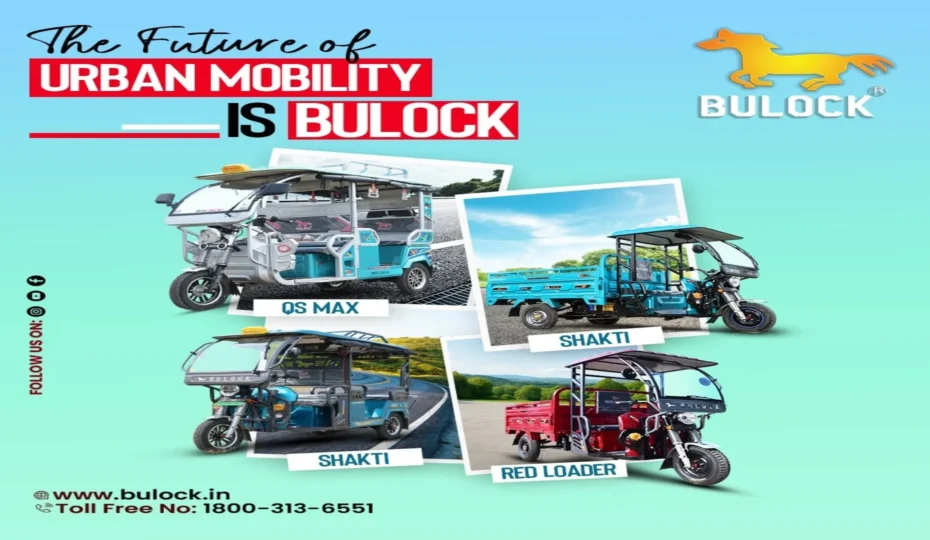
Electric vehicles are making substantial changes to the commercial transport sector in India. Both passenger e-rickshaws and loader e-rickshaws, which have low costs, are eco-friendly & profitable, are two types of electric vehicles that can be purchased. However, they’re two different things since one of them is intended for carrying passengers, while the other is for carrying goods.
If you are considering investing in an electric three-wheeler, you have to choose the right vehicle; otherwise, your earnings will decrease, and your costs will likely increase.
The purpose of this guide is to provide a comparison between passenger and loader e-rickshaws in detail so that you may decide what best fits your business plan.
What is a passenger e-rickshaw?
The primary purpose of a passenger e-rickshaw is to provide safe and comfortable transport for human passengers. E-rickshaws are widely used throughout urban areas such as cities, towns, villages, train stations, bus stations, and local markets.
Best For
- Daily passenger transport
- School and college routes
- Railway station pickups
- Residential areas
- Tourist locations
- Last-mile connectivity
What Is a Loader E-Rickshaw?
Loader e-rickshaws are designed to transport goods as opposed to passengers (i.e., they are tailored for use as delivery or freight vehicles). They have a robust cargo platform that enables the movement of commercial cargo over small to medium distance.
Loader e-rickshaws can help businesses lower their fuel costs while increasing their efficiency in terms of deliveries.
Loader e-Rickshaws are Best Suited For:
- Grocery Retail
- Vegetable Vendors
- Courier Services
- Wholesale Distribution
- Hardware Stores
- Delivery of Fast Moving Consumer Goods (FMCGs)
- Transporting Agricultural Products
- Delivery via eCommerce
Passenger E-Rickshaw vs Loader E-Rickshaw
| Feature | Passenger E-Rickshaw | Loader E-Rickshaw |
|---|---|---|
| Primary Purpose | Transporting passengers | Carrying goods |
| Seating Capacity | 4+1 | Driver only |
| Cargo Space | Minimal | Large cargo platform |
| Daily Income Source | Passenger fares | Goods delivery charges |
| Comfort | High | Moderate |
| Payload Capacity | Low | High |
| Business Type | Public transportation | Commercial logistics |
| Maintenance | Moderate | Depends on load usage |
| Best Investment For | Transport operators | Business owners & delivery services |
Earnings from E-Rickshaws – Which One Makes More Money?
The type of e-rickshaw you choose depends on how you want to use the vehicle. Passenger e-rickshaws provide income by making multiple trips during the day. Drivers that work in areas where there is a greater need for e-rickshaws will create consistent daily income.
Places where you can find a lot of passengers include:
- Urban markets
- Train stations
- Bus stations
- Schools
- Residential Areas
Amount of income earned by drivers will depend on…
- How many trips they make during the day
- Local demand for e-rickshaw services
- Fare Rates
- How many hours they are working
Loader E-Rickshaw Income
Loader e-rickshaws earn money by providing transportation services to businesses who need to move goods. We find loader e-rickshaws generally deliver goods for a business under a fixed rate contract or on a short-term basis with the same company.
Their customers usually include:
- Local retailers
- Wholesale markets
- Courier companies
- E-commerce
- Farmers
- Industrial supply companies
Loader e-rickshaws help businesses keep goods moving daily, therefore providing more steady income for their drivers.
Running Cost Comparison
Both types of vehicle provide benefits to the average consumer with respect to cost.
From a cost perspective, electric e-rickshaws are less expensive than conventional petrol/diesel vehicles in the following ways:
- Electricity is less expensive than petrol/diesel
- Maintenance is lower
- There are fewer moving parts
- There is no cost of fuel
- The total cost of providing service is lower than providing service for a petrol/diesel vehicle
There may be some additional maintenance with respect to loader e-rickshaws, as they typically carry a heavy load on a regular basis.
Which Vehicle Is Best For Rural Areas?
Passenger E-Rickshaw- Villages will benefit from electric e-rickshaws with respect to their ability to provide affordable transportation to schools, markets, hospitals, and nearby cities.
Loader E-Rickshaw- For rural areas with a focus on agriculture, electric e-rickshaws will be beneficial for people who need to:
- Move agricultural produce
- Move fertilizers
- Move seeds
- Move animal feed
- Transport construction materials
- Move farm equipment
- Transport daily goods and supplies
If you live in an area with an agricultural or trading economy, an electric loader e-rickshaw can provide income opportunities that a passenger e-rickshaw cannot provide.
Battery and Range
Most modern e-rickshaws now have lead-acid and lithium-ion battery options available.
Advantages of Lithium-Ion Batteries:
- Longer Battery Lifespan
- Faster Charge Times
- Lightweight
- Superior Performance
- Reduce Maintenance
- Longer Driving Range
- Maintain Consistent Output
If you operate your e-rickshaw on a commercial basis every day you will get a better overall value long term by using lithium-ion batteries, even though the initial investment to purchase the batteries will be more.
How to Choose the Right E-Rickshaw
Before making a purchase, ask yourself the following questions:
Choose a Passenger E-Rickshaw if:
- You want to transport people.
- Your area has high passenger demand.
- You prefer multiple daily trips.
- You enjoy customer interaction.
- You want to work around markets, stations, or residential areas.
Choose a Loader E-Rickshaw if:
- You want to transport goods.
- You own a business.
- You have delivery contracts.
- You work with wholesalers or retailers.
- You want commercial logistics opportunities.
Important Factors to Consider Before Buying
Regardless of the type you choose, evaluate these factors carefully:
- Battery technology
- Motor power
- Payload capacity
- Vehicle build quality
- Suspension
- Ground clearance
- Braking system
- Charging time
- Warranty coverage
- Spare parts availability
- Service network
- Brand reputation
- After-sales support
Choosing a reliable manufacturer can reduce maintenance costs and improve long-term profitability.
Conclusion
There is no clear-cut winner between passenger e-rickshaws and loader e-rickshaws since they are both designed for different types of commercial activity.
If your primary business objective is to generate income by transporting paying customers on a daily basis via e-rickshaw (passenger), then this would be the best option for you. There is a constant demand from commuters in high-density populated areas, and this mode of transport is more economical than any other means of public transport.
If your intent is to use an e-rickshaw (loader) for transporting goods or for running your own delivery service, then this type of vehicle also presents an excellent opportunity for generating revenue through transporting cargo frequently between multiple customers or destinations.
Before making your purchase, it is important that you assess your potential customers, where you will be operating your business, the operational needs of your business and the amount of income you expect to earn. By knowing these factors when selecting an e-rickshaw for your needs, it will allow you to maximize your profitability over the long term, as well as create a sustainable business model.
Frequently Asked Questions (FAQs)
1. Which is more profitable: a passenger or loader e-rickshaw?
Both can be profitable. Passenger e-rickshaws generate income through regular passenger trips, while loader e-rickshaws earn by transporting goods for businesses. Profitability depends on your local market and business model.
2. Which e-rickshaw is better for a new business owner?
If you already have connections with shops, wholesalers, or delivery businesses, a loader e-rickshaw can be an excellent investment. If your area has strong passenger demand, a passenger e-rickshaw may provide faster daily income.
3. Can a loader e-rickshaw carry passengers?
No. Loader e-rickshaws are specifically designed for transporting goods and should not be used to carry passengers.
4. Which battery is better for an e-rickshaw?
Lithium-ion batteries are generally preferred because they charge faster, last longer, require less maintenance, and provide better overall efficiency.
5. Is an e-rickshaw suitable for rural areas?
Yes. Both passenger and loader e-rickshaws perform well in rural areas. Passenger models are ideal for local transportation, while loader models are excellent for agricultural and commercial goods transportation.
6. What should I check before buying an e-rickshaw?
Consider battery quality, motor performance, payload capacity, build quality, warranty, service availability, spare parts support, and overall brand reputation before making your purchase.